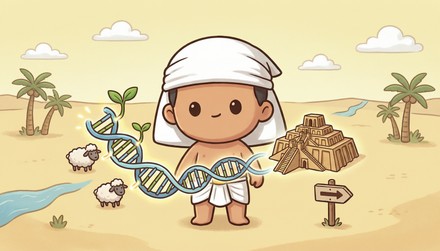
Scientists performed DNA testing on the remains of a man who lived in the Nile Valley 4,500 years ago.
科学家对生活在 4500 年前尼罗河谷的一位男性的遗骨进行了 DNA 检测。
The results may reveal new clues about how Egyptian civilization flourished.
检测结果可能会揭露关于埃及文明是如何兴盛起来的新线索。
Analysis of the skeleton showed that one-fifth of the man's DNA came from ancestors living in another great civilization 1,500 kilometers away.
对这具骨架的分析显示,这名男子五分之一的 DNA 都来自于居住在 1500 公里外另一个伟大文明的祖先。
These ancestors belonged to the Mesopotamian civilization, in present-day Iran.
这些祖先属于当时的美索不达米亚文明,也就是现今的伊朗地区。
Archaeological evidence suggests that ancient Egypt and Mesopotamia may have been in contact as early as 10,000 years ago.
考古证据表明,古埃及文明和美索不达米亚文明可能早在一万年前就有过接触。
At that time, Mesopotamians began farming and domesticating animals, initiating the shift from hunter-gatherers to agricultural societies.
当时,美索不达米亚人开始进行农垦并驯化动物,从而开启了从狩猎采集者向农耕社会的转变。
Many scholars believe that this social and technological change may have influenced similar developments in ancient Egypt.
许多学者相信,这一社会和技术变革可能影响了古埃及文明的类似发展进程。
But before this, there was no solid evidence of direct contact between the two populations.
但此前还没有确凿的证据证明两个人群之间发生过直接接触。
Scientists have been using analysis of ancient human DNA to track human evolution over millions of years.
科学家一直在用对人类远古 DNA 的分析来追踪人类在数百万年间的进化过程。
Improvements in this technology now allow it to present more recent historical events in a new way.
但这项技术的改进意味着它现在有可能以一种新的方式呈现更近期的历史事件。