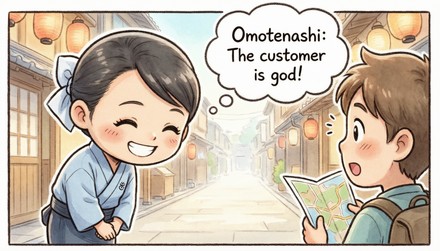
Japan is known for its good customer service.
日本以其良好的客户服务而闻名。
Many people who visit the country's shops, hotels and restaurants find that workers there are polite, kind and ready to help.
许多参观该国商店、酒店和餐馆的人发现那里的工作人员礼貌、友善并乐于助人。
The country's good service may come from something known as omotenashi.
该国优质的服务可能源于所谓的“omotenashi”。
Often translated as 'hospitality,' it means working hard to make customers happy while not asking for anything back.
通常被翻译为“款待”,意味着努力让顾客满意而不求回报。
So, of course, that means there's no need to tip for good service in Japan!
所以,当然,这意味着在日本无需为优质服务付小费!
Omotenashi can be seen in the little things.
Omotenashi体现在细微之处。
Workers may bow when customers walk into their shop.
店员可能会在顾客进入店铺时鞠躬。
Customers may get a towel to clean their hands before eating at a restaurant.
顾客在餐馆就餐前可能会得到毛巾擦手。
Workers will speak to customers using very polite language.
工作人员会使用非常礼貌的语言与顾客交谈。
Shop workers also won't be talking to each other — they'll be waiting to see what their customer needs!
店员也不会互相交谈——他们会等待观察顾客需要什么!
Japanese also has the phrase, okyakusama wa kamisama — which means 'the customer is god.'
日语中还有一句话“okyakusama wa kamisama”,意思是“顾客是上帝”。
And if the customer is god, it can sometimes be very difficult for businesses to say no to them!
而如果顾客是上帝,企业有时很难对他们说不!
But all these customer service rules can also make it difficult for workers to help a customer with a problem they've never seen before — because they don't know what the rule is!
但所有这些客户服务规则也可能使员工难以帮助顾客解决从未遇到过的问题——因为他们不知道规则是什么!
Of course, good customer service can be found in many places around the world.
当然,世界各地都可以找到优质的客户服务。
But people who visit Japan may find that they remember the country's omotenashi long after they've gone home!
但访问日本的人们可能会发现,在回家很久之后,他们仍然记得该国的 omotenashi!