People collect all sorts of things.
人们收集各种各样的东西。
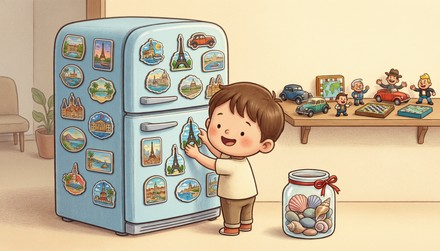
I collect fridge magnets, so my fridge has slowly become a colourful map of everywhere I've been.
我收集冰箱贴,所以我的冰箱慢慢变成了一张我去过的所有地方的彩色地图。
I also have fond memories of collecting rocks and shells from the beach with my mum when we'd visit the coast in summer.
我也怀念夏天和妈妈去海边时一起收集岩石和贝壳的美好回忆。
It's true that some people collect natural objects such as fossils and interesting stones, while others bring home souvenirs from their travels.
确实,有些人收集化石和有趣的石头等自然物品,而另一些人则从旅行中带回纪念品。
There are also people collecting miniature versions of real commercial products and tiny replicas of familiar objects, for example scaled-down retro toys, classic board games and action figures.
也有人收集真实商业产品的微缩版和熟悉物品的小复制品,例如缩小版的复古玩具、经典棋盘游戏和动作人偶。
In this way, collectables can be both decorative and functional, giving us something nostalgic to look at or fiddle with when bored.
这样,收藏品既可以装饰也可以实用,给我们一些怀旧的东西来看,或者在无聊时摆弄。
But why do people have such a strong desire to collect things?
但为什么人们有如此强烈的收集欲望呢?
One explanation is that collecting gives us a sense of order and achievement.
一种解释是,收集给我们一种秩序感和成就感。
Happiful, a mental health and wellbeing magazine, wrote that adding to a collection creates a sense of progress and accomplishment.
心理健康与福祉杂志《Happiful》写道,增加收藏会创造进步和成就感。
According to an article published in the Journal of Consumer Research, titled Seeking Structure in Collections: Desire for Control Motivates Engagement in Collecting, collecting can help people feel more in control.
根据《消费者研究杂志》上发表的一篇题为《在收藏中寻求结构:控制欲激发收藏参与》的文章,收藏可以帮助人们感觉更有控制力。
It explains that collections can become an extension of our identity.
它解释说,收藏可以成为我们身份的延伸。
The things we collect reflect our hobbies, interests and loyalties.
我们收集的东西反映了我们的爱好、兴趣和忠诚。
However, not everyone believes collecting is beneficial.
然而,并非每个人都认为收集是有益的。
Advocates of minimalism argue that owning fewer possessions improves wellbeing.
极简主义的倡导者认为,拥有更少的财产可以改善福祉。
As Beverley D'Silva reported for the BBC, the simplicity associated with a minimalist lifestyle may even contribute to greater happiness.
正如贝弗利·德席尔瓦为BBC报道的那样,与极简生活方式相关的简单甚至可能有助于更大的幸福。
From this perspective, filling our homes with collections can seem more like unnecessarily hoarding clutter.
从这个角度来看,用收藏品填满我们的家可能看起来更像是不必要的囤积杂物。
There is also an important distinction between thoughtfully curating your collection and simply accumulating more possessions.
在精心策划你的收藏和简单地积累更多财产之间也有重要的区别。
The Journal of Consumer Research article warns that some collectors can be drawn into excessive spending, especially when companies release new or rare additions to collections that were once considered complete.
《消费者研究杂志》的文章警告说,一些收藏家可能会被吸引过度消费,尤其是当公司发布曾经被认为完整的收藏的新或稀有添加时。
In those cases, collecting may be driven less by passion and more by pressure.
在那些情况下,收集可能较少由激情驱动,而更多由压力驱动。
Despite this, collecting remains as popular as ever.
尽管如此,收集仍然像以往一样受欢迎。
Perhaps the reason collecting endures is simple – collections tell stories.
也许收集持续存在的原因很简单——收藏讲述故事。
And displaying these collections can be just as satisfying as finding them.
展示这些收藏品和找到它们一样令人满意。
Happiful describes collections as a kind of self-portrait, reflecting our interests, personality and memories.
《Happiful》将收藏描述为一种自画像,反映我们的兴趣、个性和记忆。
Whether it's fridge magnets, shells or action figures, the real value often lies not in the objects themselves, but in the memories and meanings attached to them.
无论是冰箱贴、贝壳还是动作人偶,真正的价值往往不在于物品本身,而在于附加于它们的记忆和意义。