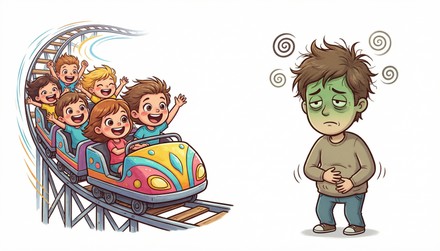
Rollercoasters have been making stomachs flip for centuries.
几个世纪以来,过山车一直让人胃部翻腾。
The earliest versions appeared in 17th-century Russia, where brave riders slid down giant ice-covered ramps.
最早的过山车出现在17世纪的俄罗斯,勇敢的骑手们从巨大的冰覆盖的坡道上滑下。
Modern steel rollercoasters transformed theme parks into thrill-seeking playgrounds.
现代钢制过山车将主题公园变成了寻求刺激的游乐场。
Today, they're bigger, faster and taller than ever.
如今,它们比以往任何时候都更大、更快、更高。
Millions of people queue for hours just to experience a few minutes of screaming, laughing and that heart-racing drop.
数百万人排队数小时,只为体验几分钟的尖叫、欢笑和令人心跳加速的俯冲。
But if you're anything like me, there comes a point when those rides stop feeling exciting and start feeling... slightly regrettable.
但如果你和我一样,总有一天这些游乐设施不再令人兴奋,而开始让人感觉……有点后悔。
As children, rollercoasters seem almost impossible to resist.
小时候,过山车似乎几乎无法抗拒。
Part of the appeal is that contrasting mix of fear and excitement.
部分吸引力在于恐惧和兴奋的鲜明混合。
According to BBC Science Focus, rollercoasters trigger the body's fight-or-flight response, releasing adrenaline, dopamine and endorphins that make the experience feel exciting and rewarding.
据BBC Science Focus报道,过山车会触发身体的“战斗或逃跑”反应,释放肾上腺素、多巴胺和内啡肽,使体验感觉刺激且有回报。
Our brains quickly learn to associate that rush with fun, which is why so many children can't wait to jump back in the queue.
我们的大脑很快学会将那种兴奋感与乐趣联系起来,这就是为什么许多孩子迫不及待地重新排队。
The sense of achievement doesn't hurt either – finally being tall enough to ride the biggest coaster feels like a rite of passage, making us feel braver and probably way cooler at the time.
成就感也无关紧要——终于长到足够高能坐最大的过山车,感觉像一种成人礼,让我们当时感觉自己更勇敢,可能也更酷。
So why does that love affair often fade with age?
那么,为什么这种热爱常常随着年龄增长而消退呢?
Unfortunately, our bodies change.
不幸的是,我们的身体会变化。
WanderWisdom explains that changes in the inner ear as we get older can make us more sensitive to motion, meaning rollercoasters that once felt thrilling may now leave us feeling dizzy or nauseous.
WanderWisdom解释说,随着年龄增长,内耳的变化会使我们对运动更敏感,这意味着曾经让人兴奋的过山车现在可能会让我们感到头晕或恶心。
Motion sickness happens when the brain receives conflicting signals from the eyes and inner ear, leading to dizziness, nausea and that feeling of churning in your tummy.
当大脑接收到来自眼睛和内耳的相互矛盾的信号时,就会发生晕动病,导致头晕、恶心和胃部翻腾的感觉。
Add stiffer joints, sore necks and a stronger awareness of risk, and it's hardly surprising that the rides we once begged to go on can suddenly feel more exhausting than exhilarating.
再加上关节僵硬、颈部酸痛和更强的风险意识,难怪我们曾经恳求去坐的游乐设施突然感觉更令人疲惫而不是兴奋。
The good news is that you don't have to completely give up coasters.
好消息是你不必完全放弃过山车。
Dramamine recommends staying hydrated, avoiding heavy meals before riding and looking towards the horizon instead of down at the tracks.
Dramamine建议保持水分,乘坐前避免饱餐,并看向地平线而不是轨道下方。
Choosing a seat towards the middle can also make the ride feel less intense.
选择靠近中间的座位也可以让乘坐感觉不那么剧烈。
These simple changes may reduce motion sickness and help you to rediscover the fun of laughing and screaming along the way without feeling the need to hurl or pass out as often!
这些简单的改变可以减少晕动病,帮助您重新发现沿途欢笑和尖叫的乐趣,而不必经常感到想呕吐或晕倒!