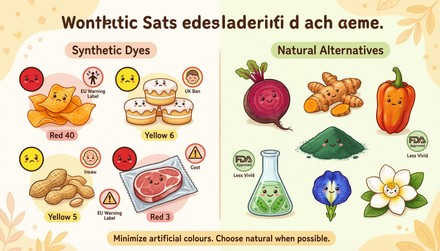
Food colouring is difficult to avoid.
食品着色剂很难避免。
From bright orange cheesy crisps to frosted cakes, and even peanuts and meat, these additives make food more visually appealing.
从亮橙色的奶酪薯片到糖霜蛋糕,甚至花生和肉类,这些添加剂使食物更具视觉吸引力。
But for years, people have been worried about their safety and the long-term effects on our bodies.
但多年来,人们一直担心它们的安全性和对我们身体的长期影响。
So, just how bad is food colouring, and what are the alternatives?
那么,食品着色剂到底有多糟糕,有哪些替代品?
Synthetic food dyes, like Red 40 and Yellow 6, have been linked to hyperactivity and attention problems in children, particularly those in key stages of brain development.
合成食用色素,如红色40号和黄色6号,与儿童的多动症和注意力问题有关,特别是在大脑发育的关键阶段。
Studies show that even small amounts of these dyes, which are commonly found in ultra-processed foods, can affect behaviour.
研究表明,即使是少量这些在超加工食品中常见的色素,也可能影响行为。
In 2010, the EU began requiring warning labels on products containing specific artificial colourings associated with hyperactivity in children.
2010年,欧盟开始要求在含有与儿童多动症相关的特定人工色素的产品上贴警告标签。
There are further issues too, such as allergic reactions.
还有其他问题,例如过敏反应。
Yellow 5 has been shown to produce hives, itching and symptoms typically associated with asthma in some people.
黄色5号已被证明会导致某些人出现荨麻疹、瘙痒和通常与哮喘相关的症状。
It is derived from petroleum and is found in a range of foods, medicine and cosmetics.
它源自石油,存在于一系列食品、药品和化妆品中。
Red 3 is also problematic – links have been found between the colour and cancer in male rats.
红色3号也有问题——已发现这种色素与雄性大鼠的癌症之间存在关联。
This dye is almost completely banned in the UK now, and food manufacturers in the USA have been given until 2027 to modify foods that currently use it in their recipe.
这种色素现在在英国几乎完全被禁止,美国食品制造商已被要求在2027年前修改目前在其配方中使用该色素的食物。
So, what can artificial colours be replaced with?
那么,人工色素可以用什么替代?
There are natural alternatives like beetroot, turmeric, paprika and spirulina.
有天然替代品,如甜菜根、姜黄、辣椒粉和螺旋藻。
Companies such as Fermentalg based in France are developing natural colourings from microalgae, such as Galdieria sulphuraria, which produces a bright blue pigment.
总部位于法国的Fermentalg等公司正在从微藻(如Galdieria sulphuraria)开发天然色素,这种藻能产生亮蓝色色素。
Products using this colour are expected to be on shop shelves in the USA soon, alongside other natural blue dyes like butterfly pea extract and gardenia blue, which have all recently been approved by the Food and Drug Administration in the US.
使用这种颜色的产品预计很快将在美国商店货架上销售,同时还有其他天然蓝色染料,如蝶豆花提取物和栀子蓝,这些最近都已获得美国食品和药物管理局的批准。
However, replacing synthetic dyes can be challenging because of stability, cost, and colour intensity.
然而,由于稳定性、成本和颜色强度的原因,替代合成染料可能具有挑战性。
Natural dyes tend to be less vivid and have shorter shelf lives.
天然染料往往颜色不那么鲜艳,保质期也更短。
So, it is hard to avoid, but for your health do what you can to minimise unnecessary artificial colours in what you eat, and stick to natural alternatives instead.
所以,很难避免,但为了健康,请尽量减少饮食中不必要的人工色素,坚持使用天然替代品。